Hoisin Vegan Wraps

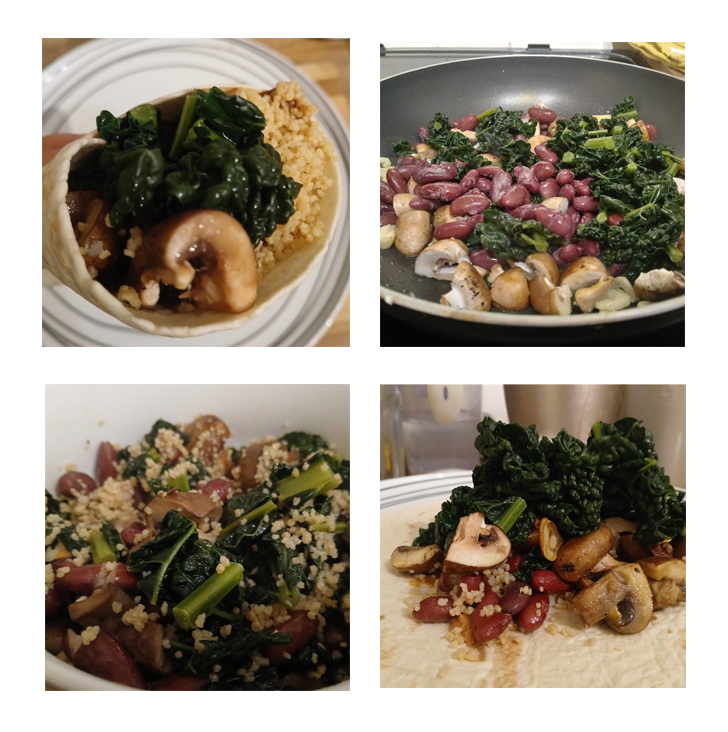
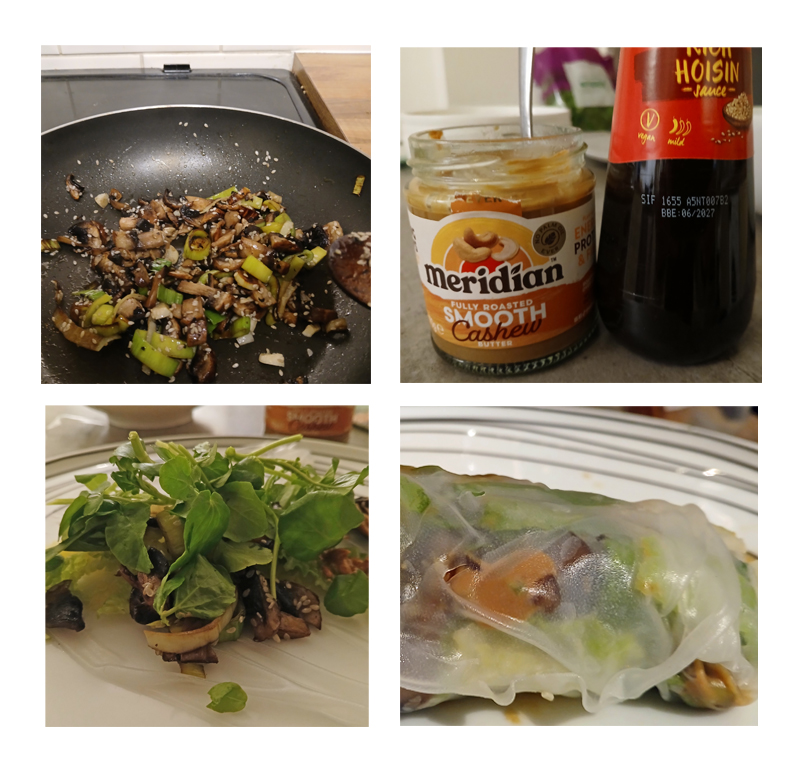
Made with mushrooms, black beans and watercress, these wraps are full of flavour and healthy too. The hoisin sauce complements the nut butter in a classic Asian combo brought to life by the peppery watercress and earthy tarragon.

Ingredients are per person so make as much or as little as you need!

shredded cabbage 90g each

drizzle of toasted seasame oil

small leek sliced

3 – 4 medium mushrooms finely chopped

black beans (third of a can each)

handful of sesame seeds

sprinkling of tarragon

watercress (approx 40g each)

pot of nut butter 

bottle of hoisin sauce

four rice paper wraps each (see instructions on pack to serve)

Prep time 10 minutes. Cook time 15 minutes. 

Fry the leek in the oil on a medium heat, add mushrooms, sprinkle with tarragon, add sesame seeds and black beans, stirring frequently. Once cooked through pour into bowl. At the same time, boil the cabbage for 5 minutes, drain, put into bowl. Put wraps, watercress, nut butter and hoisin sauce on the table with teaspoons to serve. Build your wraps in layers, wrap and serve!

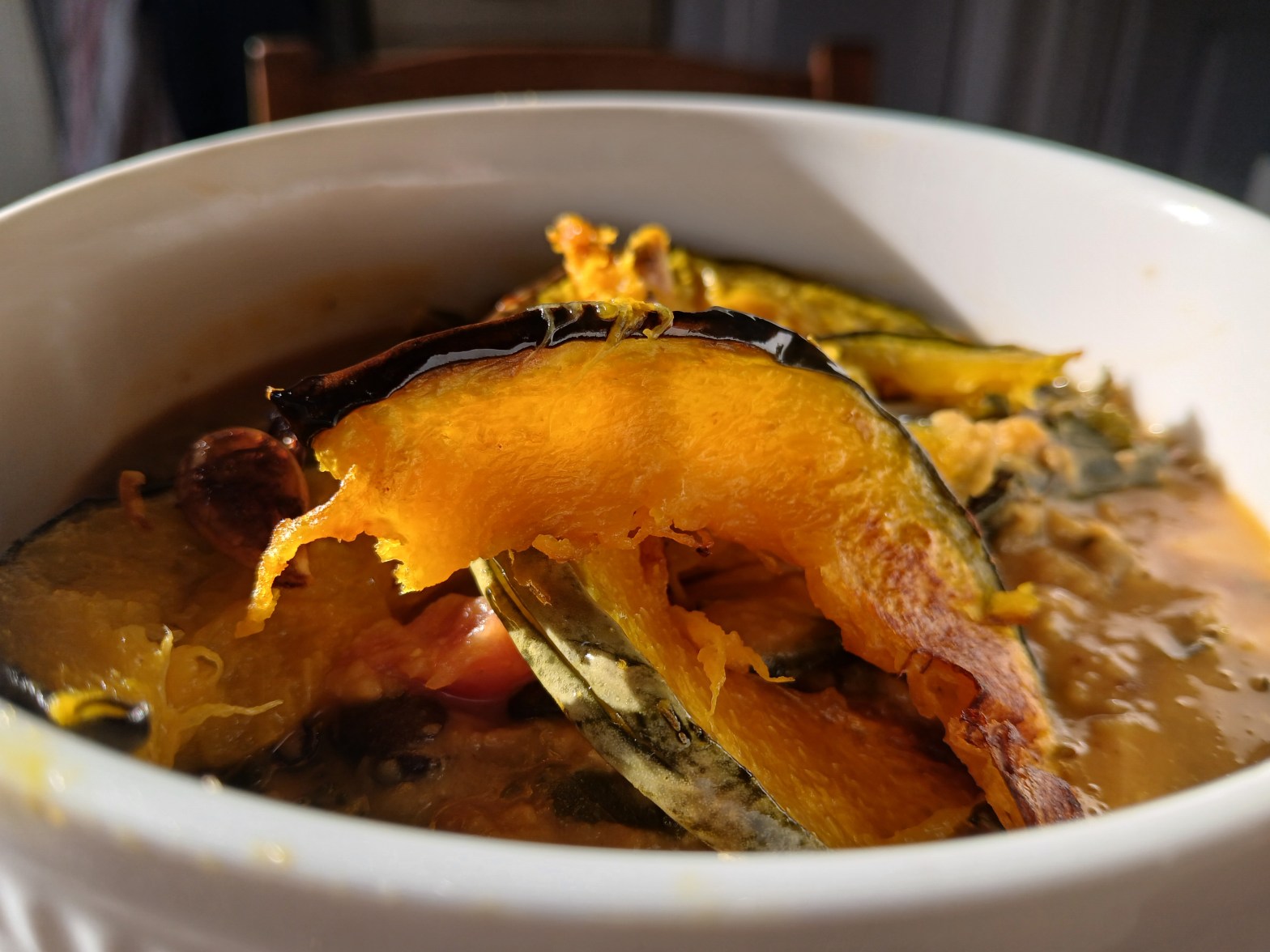
Roasted Squash and Crispy Kale Pasta

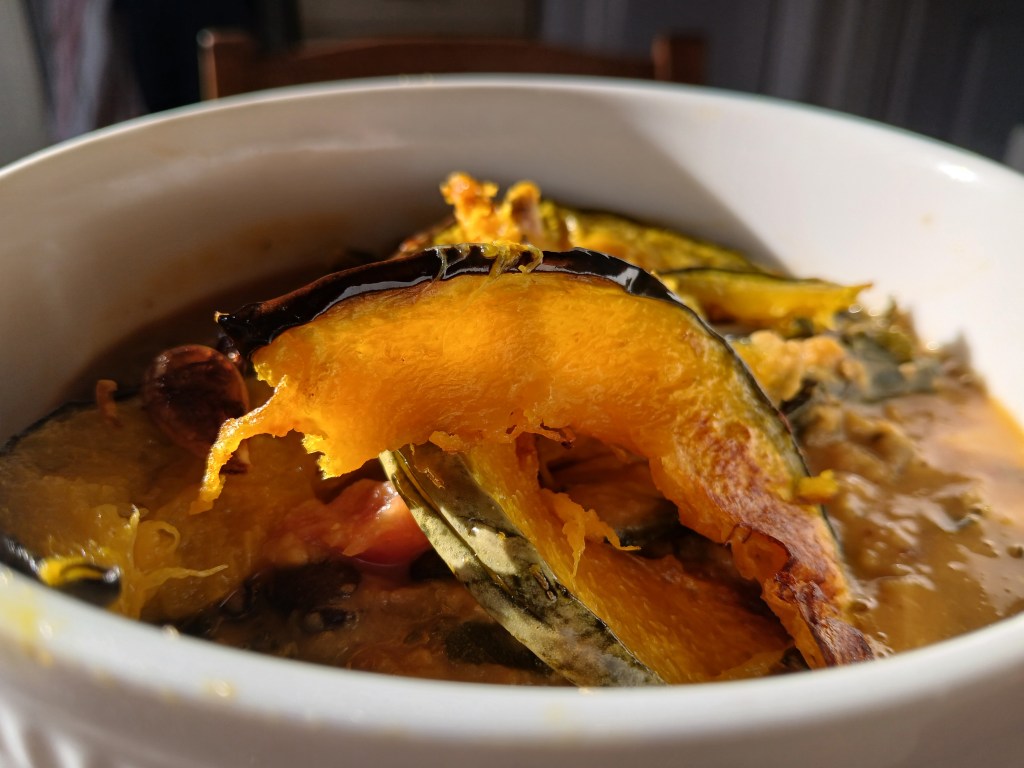
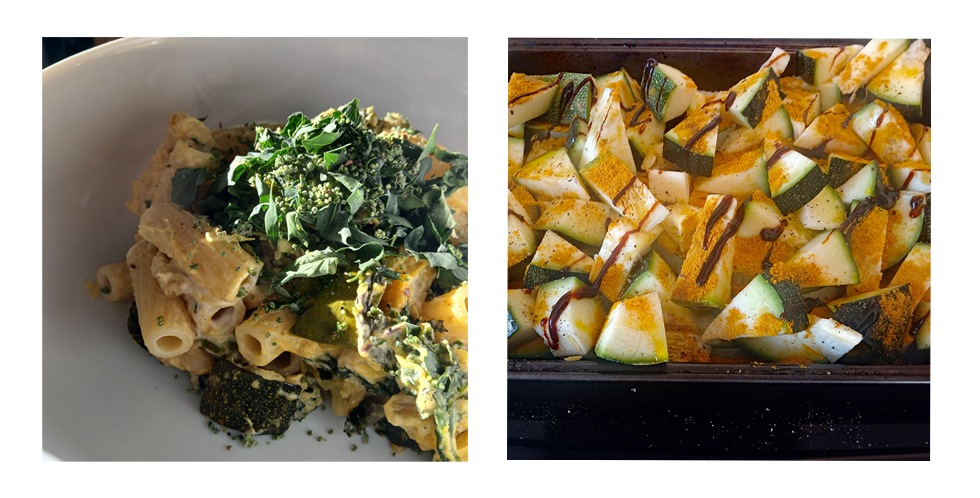
The taste of summer, with squash, courgette, kale and cannellini beans all fresh from the garden. This seasonal dish has highs of roasted squash and crispy kale with undertones of earthy beans and green salad. The creaminess of the vegan cream cheese make its even more moreish. Serves 4.

750g squash

500g courgette

drizzle syrup

2 – 3 teaspoon spice

1 can cannelini beans

250g kale, boiled

sprig of tarragon

pasta x 4 portions

vegan cream cheese

green salad

dice squash and courgette, put in roasting dish and dust with spice, drizzle with syrup. Preheat oven to 180C. Set oven timer for 45minutes. Boil kale for 8 minutes. After 30 minutes add can of beans to roasting dish, add kale on top with sprig of tarrgon buried. Roast for further 15minutes. Cook pasta in a large pan. Drain pasta and put back in hot pan. Add vegan cream cheese to pasta. Add roasted vegetables to pasta, and stir until cream cheese coats veggies and pasta. Serve with salad.

FREE E-book: 10,000BC – Ancient Lessons in Agroecology and Low Carbon Economics

I am pleased to announce the release of my new book, which I’m releasing as a free e-book today, Earth Day! 10,000BC – Ancient Lessons in Agroecology and Low Carbon Economics is an all you need to know about agroecology, what was wrong with the green revolution and why we don’t want another. Follow the link to download your free copywww.10000bc.org

What is agroecology? What is low carbon economics? As we transition to net zero what do we ‘the people’ need to do to make organic food for all a reality? There are a multitude of solutions to the climate crisis being offered in the farming world today, but not all of them are organic. As COP28 recognises the need to sustainable agriculture1, what does that mean for a country like Britain where 83% of its citizens live in the city and less than 1% of us are farmers? The emerging theory supported by a number of stakeholders, farmers, and policy makers, is that we need a smallholder revolution: a million new farmers to work the land. How practical is this suggestion? Even if we recruited enough farmers, can agrocecological solutions feed the world? 

10,000BC: Ancient Lessons in Agroecology and Low Carbon Economics takes the reader on a journey back in time to the dawn of farming. What made us start farming in the first place? As we face a farming crisis today, what can we learn from our prehistoric ancestors? In the last 12,000 years, the population has grown exponentially, and materialism ballooned; what are the underlying cultural implications of these changes? How have we historically reacted to global food pressures? Do we need a new economic focus; an alternative to high growth economics? 

Agroecology is a method of sustainable agriculture that cares about the lives of the farmers, the consumers and the land. It aims for equality, justice and diversity so that good food is not only grown, but also distributed to everybody. 10,000BC introduces the idea of agroecology, alongside low carbon economics, with an action plan to grow real food for all. It aims to be a practical and accessible text on agroecology introducing the concept to new audiences that are interested to know more about the solutions to the current industrial farming model.

The text introduces the idea of ‘panic farming’. Historically, short termist solutions that create more problems in the long term have been touted as panaceas, but it is the slow and steady approach that will win the race. First it was population growth, now it is climate change. Do we really need to resort to panic farming when agroecology offers solutions to these crises?

115,000 words with over 850 references, 10,000BC weaves prehistory into the modern story of agriculture. Throwing light on the alternative to the modern industrial paradigm, the book explores the cultural and economic shifts required to challenge it. The text aims to question the industrialism that dominates popular opinion and decision making in agriculture.

My journey as a food and farming campaigner started in Uganda in 2010 when I worked as an accountant for a charity trying to raise money for polycultural homesteads. The smalholdings were considered the most efficent use of land, as they are climate change resilient and connect peasants with enough resource to supply themselves and the home market with food. My journey into agriculture continued in India that year, when I stayed in Auroville, performing a systems analysis of the food and farming units supplying the spiritual community. When I returned to the UK, I lived on mixed ecological farm Church Farm Ardeley working as an intern for the Oxford Real Farming Conference (ORFC) and then the All Party Parliamentary Group (APPG) on Agroecology. Following that I founded Farm the City London connecting urbanites with food growing spaces and running an annual festival.

Before taking time out to write this book, I spent over a decade as a chartered accountant. I qualified with top 5 firm BDO LLP in 2009, then went on to work as Financial Controller for various Small Enterprises (SMEs). I have an English Literature and Cultural Criticism BA (Hons) from Cardiff University.

1https://www.bbc.co.uk/news/science-environment-67594303

New Classes

I am excited to announce new classes on Mondays and Thursday at St Elizabeth Hall SP1 2SG. We will be starting with the root chakra on March 31st and work our way up the sushumna changing focus every new moon, We will work on each individual chakra, followed by the intersection with its adjacent chakra. First chakra, first and second chakras, second chakra, second and third chakras, third chakra, and so on. By working on the intersection we stimulate the flow between the two chakras. We tackle each point anatomically, on the physical body, energetically on the pranic body and psychologically on the mental body. It takes fourteen moons to complete one flow, working from the root to the crown. You can join the flow at any time but if you can start from the beginning, at the root, even better.

“I have practiced and honed this method for over five years and it has profoundly deepened my experience of the chakras and energy body” Ros, course creator

We use pranayama (breathing exercises), bandha (energy locks), meditation, chanting and asana to access the five bodies during a 90minute class. We maintain chakra focus whether practicing flow, yin or trauma informed flow. The yogi is invited to choose which class they need / feel drawn to on any given day. Read more about each class here.

Monday: Flow Yoga (90min) 6.30pm – 8pm // Trauma Informed Flow Yoga 8.15pm – 9.15pm

Thursdays: Flow Yoga (90min) 6.30pm – 8pm // Yin Yoga 8.15pm – 9.15pm

Prices start from £10, click here for more information.

Classes held at St Elizabeth Hall, SP1 2SG (parking available)

A particle and a wave! Why the light “principle of complementarity” supports 2 in 1 chakra work

Light is both a wave and a particle. A seemingly impossible contradiction defines our most fundamental element. Light moves up through the sushumna (our central spinal channel) in a continuous wave, but also as a pulse, lighting up each chakra as it goes. This means the chakras exist both on a spectrum and also as a series of separate points. The “prinicple of complementarity” found in quantum science is echoed in the energetic bodies.

The aim in yoga is to light up the body’s network of nadis, nerve like channels of light. The main networks are sushumna, ida and pingala that flow in and around the spine (see image). The seven main chakras punctuate th sushumna, and are said to exist at the intersections of ida and pingala, two channels that criss cross the energy body (shown in red and white). Some schools of thought believe that ida and pingala cross at the chakras, others believe that they cross inbetween the chakras. In the case of viewing the chakras as delimited points in series, the inbetween area, or the meeting of one chakra with the next provides a point of antimatter, of nothingness, a void, worthy of investigation in its own right. What goes on between the chakras when we look at them as a spectrum? The energy flows from one chakra to the next, colours blend like a rainbow, the meaning of one chakra comes up against the meaning of the next. In the case of viewingthe chakras as points on a spectrum of rainbow light, the inbetween points mark the merging of one chakra into another; there is a bridge of light that enables light to flow freely up and down the sushumna. Instead of working with just the single chakras we can work on two together, creating chakra pairs. This is not a new idea. Clairvoyant Barbara Brennan recommends placing the hands over a chakra, and then with it, its adjacent chakra. This has the effect of increasing flow of energy between the chakras.

When light flows up and down the channels, pure light, bliss is passed through the koshas. Bliss, consciousness, mind, prana and body light up We can only experiment with our own energy bodies to feel how contradictory truth manifests in us.

Take this opportunity to practice and observe the self with Sarasvati Flow, one of the most thorough chakra courses ever created. 56 unique lessons, over fourteen moons, from March 2025 to May 2026 taking in the full rainbow spectrum of sushumna and the complimentarity of the chakra network. Click here for more information.

Bonanzical Bolognese

Once again I’m opting out of simple, and instead going for a bonanza of ingredients, hopefully you will have some of them already in the cupboard. A rich bolognese sauce with plenty of veg to keep you helathy: protein in the soya and beans, iron in the spinach, vitamin C in the tomatoes. One yummy dinner. Serves 6

Splash if oil

oregano, thyme, cumin (tsp of each)

salt and pepper

Large onion diced

3-4 cloves garlics sliced

175ml red wine (alcohol free is ok)

large splash of mushroom ketchup

200g mushrooms, roughly chopped and fried

soya mince (can be frozen just add 10min to simmer time)

tin chopped tomatoes

2 tbsps tomatoe puree

½ tbsps garlic puree

tin kidney beans

large bag of spinach

handful of fresh parsley

Add the first five ingredients and fry until onion is golden brown. Pour the wine over the onion/garlic, add toms and purees and stir in the mushrooms and mince. Once heated through add beans and allow to simmer for 20minutes. Add spinach and parsley, allow to wilt and stir in. Serve with spaghetti, rice or couscous. A dollop of houmous or tahini gives an extra twist