A super simple recipe with a rich, creamy nuttiness thanks to the chestnuts and spices.
Purple sweet potato – chopped into cubes 2-3cm
Broccoli – sliced into batons
Chestnuts – in a jar, ready cooked
Chickpeas
Coconut milk – one can
Spices – paprika, thyme, garam masala, salt and pepper
Chop the potato and fry in spices. Add coconut milk and bring to the boil until potatoes begin to soften. Then add broccoli, chickpeas and chestnuts. Cook until broccoli soft, stir occasionally. Serve with rice, couscous, or salad and bread.
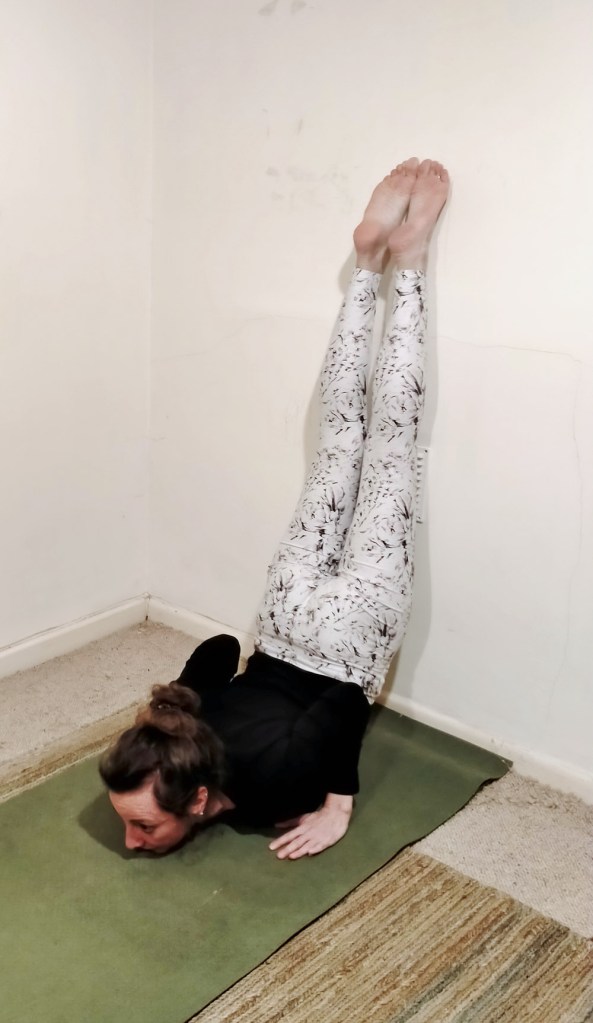
I must say I enjoy practicing with the cycle ofthe moon. It’s the first quarter moon this bank holiday weekend, so I know I’m a quarter of the way through practicing the root chakra routine. This moonth, I am working on Bird of Paradise. Strictly speaking, Bird of Paradise could be taught in a sacral focussed class because it demands flexibility in the hip flexors. It also calls on a lot of core strength, associated with the third chakra. But when taught in the root class, the focus in Bird of Paradise is on the grounding leg, and encourages the student to ground down into the earth, to “lift up”. Lift up means both physically, where other parts of the body reach for the sky, and spiritually, to raise the spirit from the heart centre.
It is hard to find a purely root focussed peak pose. I am still wondering if I am missing a more fitting peak pose than Bird of Paradise for the root chakra class. That’s said, its imagery of th tropical flower is a beautiful, delicate, unusual shape that reminds me that my yoga practice is more than just physical exercise; it is about positively engaging the natural world and enjoying the essence of life carried through the yoga poses.
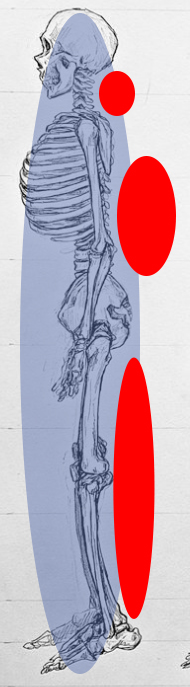
I am enjoying the easy warm up that accompanies this routine. The root chakra, as approached in the sun salutaitons and warrior sequence, are not the most popular yoga moves, but they are important because they tackle our relationship with the earth, as wel as our most intimate relationship with ourselves. Our feet connect us to the earth day in day out and it is easy to forget about them and the work they do for us. Working on the root chakra is all about creating a stable base from which to go out into the world. My motto for this first root chakra based class, is ‘know thyself’. But it is not always easy to confront the self, and I know that these moves can feel sluggish, or even stir up latent anger and fear. So I’m keeping the warm up easy with some pawanmuktasana and a foot massag: the aim isas we enter the space of the root chakra, the student is grounded and secure. In a root chakra class, by enagaging with the lower half of the body, our feet and our l egs, we can sometimes sense what is bugging us, or even scaring us, away from that sense of lightness that we seek on and off the yoga mat. The shadow emotion associated with the root chakra is fear. If we find our connection to the earth is unstable, it is likely that we are going through a difficult time, or someone near us is going through something that is having an effect on us.
I have learned more by watching my own mind move, possibly than any other yoga practice. Yoga asana is a moving meditation, it is said to prepare the body for a seated mediation practice, but it also cultivates awareness in movement. I am experimenting with practicing the same routines each year, because the aim is to watch the self move and think. Abhyasa means practice, and also repetition; it through repetition of our practice that magic is revealed. It isn’t always about being wowed by getting into a peak posture, although I do enjoy that as well. By working on the chakras sequentially, I can build on the knowledge gained at each chakra. Root chakra work always combines knowing the self, with making time to appreciate and care for the earth.
Grounding down is a process whereby we use our feet and legs to enhance our connection to the earth. This connection changes depending on what is going on in our lives. The root chakra relates to family, work and home, the core things that we need to feel secure in life. When we can’t achieve perfection in these areas, it canbe helpful to cultivate acceptance of what is. It is rare to feel that everything is going perfectly, but a certain amount of acceptance can lead us to feel balanced enough to go out into the world. If we cannot accept things as they are, it could be a signal that we need to take action.
The environmental damage caused by our material consumption of goods affects how we feel about life on earth. Many people are immune to the earth’s suffering. Personally, I find my yoga practice shows up shortcomings in my immediate surroundings, or circumstances. By connecting with beautiful creatures and plants in my yoga routines, as well as harnessing the moon’s power, I hope to create a method that awakens the practitioner to the pain of the earth. It is only be feeling the tragic loss of habitats, the suffering of animals, the displacement of humans thanks to climate change freak weather, and so on, that we will reach critical mass. By becoming vegan, or flexitarian, we are doing what the earth needs us to do to protect it. On a very subtle level that makes us more at home on planet earth, and we should feel it when we practice.
When I work on the root chakra I am learning to read my own position, but I hope in time that I will one day read the earth. Taking time to care for the earth is a central tenet of yoga practice, it is karma yoga, or yoga in action. The earth has a soothing vibration, it inspires awe in so many ways, which nourishes the human spirit. In a very physical way we connect to the earth through our legs and feet, and it is especially relevant that we when work on this connection to earth that we consider what we are doing to protect and love our home, the earth.
After practicing and teaching (on and off) Jivamukti for over 8 years, I decided in 2020 to develop my own method that was slightly more accessible for the students I was teaching. I experimented with one approach and then another, until in the last year I have taken it to a whole new level, bringing my students with me. Let me tell you about my journey with Saraswati Flow ‘through the chakras’
Today, I’ve just completed 14 lessons designed to work systematically from the root chakra up to the crown chakra changing every new moon from Spring 2022 through to Summer 2023.
Previously, I have worked onmy chakras in workshops, DVDs and reiki, but I wanted to experiment with the idea of working on each chakra individually over the long term, like a whole year with a month for each. Most yoga lessons focus on one chakra area, or one body part, but how many teachers focus on the whole seven for the whole year?
I started with a routine that focussed on the root chakra. Then I moved on to root-sacral. I am having issues with what to call the inbetween areas but have found myself counting, one, one-two, two, two three, three, three-four, etc etc.
Why not focus on just seven areas?
I first designed a routine with a double chakra focus as part of my training with the British Wheel. I wanted something that would get me into King Pigeon pose in an hour. I noticed that by working around the illio sacral and psoas muscles, I was actually working between the first and second chakras. When I was asked to write another routine, I decided that I would challenge myself to write a 6 – 7 routine focussing on the ajna and crown chakras. I realised that we are always combining these two areas instead of affording them their own separate class. But I also noted that treating them together created itsown kind of vibe. I came across the term ‘dual awareness’ in David Treleaven’s book Trauma Sensitive Mindfulness. It is a psychology term that means learning to watch the various parts of the mind. I began to appreciate that when we practice with an awareness around two chakras areas, we are cultivating an ability to watch more than one thing at once. So as I moved into King Pigeon I was confronting issues of stability in my home and sense of self (first chakra), as well as cultivating a sense of openness with which to face Others in my life (second chakra). I began to wonder, perhaps it is the complexitity of these peak poses that is so appealing.
When I combined the chakras and practiced each routine in sequence, I noticed that the prana moved moved more quickly up my sushumna into my heart space. Linking one routine to the next over the space of a year resulted in a very thorough practice. It is extremely methodical requiring dedication and consitent practice, but it works. By practising on each chakra individually and each chakra with the next, you effectively work on each chakra three times a year. That’s three moons each! I ended up working on sacral chakra and solar chakra with the added bonus that my heart was opening too, it was quite spontaneous. I wanted the classes to be challenging, while being slightly less demanding than Jivamukti, a method I had practiced for nearly a decade. So what I have dubbed Saraswati Flow is meant to be more accessible to the average yoga student, and I can slim each class down into a beginners format as well, so I will always be able to practice what I teach regardless of the level of student I am teaching.
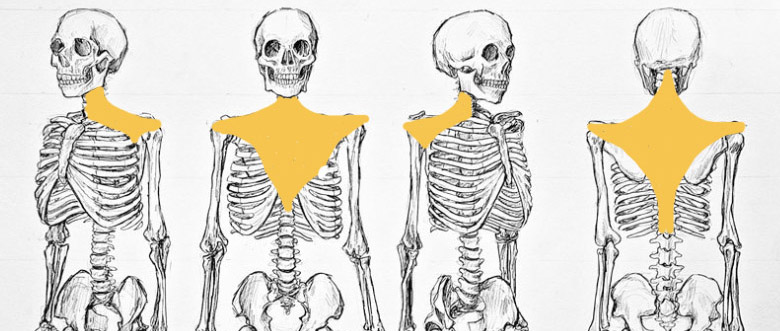
What’s important in a yoga practice, and what I aimed to avoid, is that you don’t pick and choose your favourite or least favourite areas to work on, every area is given an equal amount of time and attention. I realised as I approached the end of the year that I had never spent so long on the higher chakras and I really had to research quite a bit to find the right peak poses. Of course every routine gives each and every chakra a work out so they can be practiced individually and if you wanted to treat an area then they design should be well rounded enough to do that. But I had a lot of fun exploring the higher chakra in so much detail; the fifth, sixth and seventh chakras all demanded a new level of design that focussed on the upper half of the body including the head and neck. I opened up my shoulders in a way that I never have before in quite such a short space of time. I even designed a seventh chakra routine with 9 different headstands incorporated into it!!
It’s easy to see the chakras as quite distinct from each other, but when you combine them it invites you to consider the themes together, and what happens when you combine the elements, as we do all the time unconsciously? Where do we see earth meeting water on planet earth? The depths of the ocean, the bottom of a riverbed? Earth can be the source of life, but without water it can be as lifeless as a desert. Fire of the ego and air of the heart space are quite a natural combination too, but when we consider them in a yogic context we think about directing the air of the heart space, of infusing it with unconditional love, and imagining how this then informs the ego, fuelling the fire for elightened activism. When you become aware of these things, as shifts in our elemental makeup, you can work to ground, to find stability, to find the kind of earth that will hold the water in a safe space away from the fire, or whatever it is that you think you need. The idea of yoga is that it gently soothes each of the areas bringing the body into balance, building strength in all areas.
In the design of the 14 moons I wanted to experiene the jungle, to travel around the world to nature’s most beautiful places. I begin with bird of paradise and end up with tiptoe fish travelling past turtle, dolphin and scorpion, amongst others. While yoga is about connecting with the self, it is also about escaping the mundane, and journeying into the mystical. A good soundtrack helps with that.
I plan on practicing the set of 14 routines again over the next 14 moons taking me to midsummer 2024. Abhyasa means to practice in Sanskrit, and it can also mean repetition. I practiced the Jivamuti Spiritual Warrior sequence solidly for about 2 years and found that my body resposnded well to the fundamental moves that it contains. The hour long routines that I have designed as part of Saraswati Flow are quite similar to the Spiritual Warrior, but they contain a peak pose and a unique warm up tailored to the chakra focus. I like the predictability that repetition brings, I am able to monitor my progress more easily and feel where I am each day bringing me into a closer relationship with myself.
I finish with a pranayama and chant, chosen to suit whichever of the 14 chakra foci I am working on, meaning I enjoy a rich class experience every time I practice. There is even a short meditation thrown in, so a full class of yoga takes about 75 minutes.
Without wanting to disparage any of my previous yoga teachers, I guess I could say that until now, in chakra terms, I was jumping around. I studied so much yoga history, and the ancient texts with different teachers, that to order it by chakra and reflect on the sutras with the echoes of this early tantric knowledge was quite an experience. There isn’t a lot about the chakras in the earliest yoga texts, it is mostly limited to references the seven levels of heaven, but my own experiences have been enough to convince me that a physical exploration of the seven chakras could inspire a fulfilling internal journey. I am curious how it will feel to work on grounding, heart opening and meditating at different times of the year, in light of the astrological calendar. But as we are not limited to sun sign astrology I think it will work. Given that teachers are supposed to practice what they teach, I wanted to share more about what I am practicing, so students can join in with more awareness. The monthly newsletter describes each of the pranayama practices, includes a recording of the chant and describes the peak posture. So if you are interested to join me, and to deepen your own practice on this journey, please sign up to the newsletter.
Unless you prefer to believe in the lost city of Atlantis, the world won’t one day end in a sublime implosion killing us all, instantly. Thanks to climate change, it is declining gradually, with areas here and there succumbing to floods, drought, storms, heatwaves, disease and starvation. In many areas there is a slow almost imperceptible rise in land temperature, that many do not notice, and how many will notice until its too late? How often do we only believe what we want to believe? (‘Is Climate Change Real Anyway?’) Sadly, that ugly, messy ending is already upon us, with scientists predicting 2 degrees of warming with no sign of it stopping, and no reduction in emissions, of any kind, in any country.
How do we communicate the need for decisive action to our leaders on a scale only seen in the COVID crisis where spending reached £350bn in just two years? Spending on climate change by UK government was only £4.4bn in 2021. How do we tell all the people with money and power that we need to change our ways and redirect the majorit of dividends into green infrastructure and retraining? How do millions of cash poor people come to acept that even cheap produce must be consumed in moderation? Supply lines and behaviour patterns, economic forecasts and profit margins, apathy and classism, all need to change if we are to beat the 2 degrees of warming. It’s about being honest about the climate, and believing that we can change our ways in time.
It was Plato, who said, leaders are only as good as their people
It was Plato, who said, leaders are only as good as their people. When I first heard this, I was dumbfounded. What could I do that would make our leaders any better? I’m not corrupt, am I? Do I steal? Do I lie? How do I become aware of my ‘self’ sufficiently to see my own shortcomings? How do I confront the lies and deceits I act out against my fellow humans, and the greediness I inherit or adopt?… Through mindfulness and brutal honesty we can come to realise what we are doing, and only then change it. It follows that greed, lies, manipulation (including sexual manipulation) between us as individuals leads to lying, cheating governments and leaders. It takes courage to admit it.
Few of us start a yoga practice out of our need to make the world a better place. No, we want to make ourselves better. So sure let’s be nicer to each other, in the hope that altrusim breeds altruism. But what if it’s more important than just being nicer. What if the very fabric of society feeds on our individual actions? Through meditation, yoga helps us to see ourselves, and our reactions to the energy moving through us, and it makes time for reflection on the relationships we have with the people that we meet. The yogic texts dictate that we must observe certain things and restrain ourselves to achieve a state of yoga, and it follows that what is good for us is good for our planet, is good for our leaders. Deepak Chopra commented at the Shift Network Healing summit last week, “the yamas and niyamas are keys for healing”.
As laid out in the central yogic text, Patanjali’s Yoga Sutras, the yamas and niyamas, the restrains and observances are as follows; the yamas: ahimsa – non-harming, asteya – non-stealing, satya-truthfulness, aparigraha-non-hoarding or non-greed, brahmacharya-sexual responsibility; and the niyamas: sauca-cleanliness, santosha-contentment, tapas-suffering, or sacrifice, svadhyaya-self study, and Iswara pranidhana-surrender to a higher power. These are the ten tenets of yoga, and each one deserves an in depth analysis of its own, but the ones I think are especially useful with influencing qualities of leadership in a time of environmental crisis are satya-truthfulness, aparigraha-non hoarding and santosha – contentment,.
Does it sound boring?! Lying is fun, isn’t it? Never so much hilarity when telling fibs, and most of us grow up doing it. In fact lying is such a treasured gift that some children prevent their peers from lying to ensure their own lying capacity! I remember one girl at primary school, she still couldn’t lie aged 30. Telling white lies is one thing, but with so much lying in our culture, it means we cannot see when corporations are lying to us about the safety of their products and their effect on the environment.
Plastics have littered the earth far and wide causing irrevocable damage from icebergs to the placentas of unborn children
Plastics have littered the earth far and wide causing irrevocable damage from icebergs to the placentas of unborn children, microplastic is everywhere, and the damaging products just keep rolling off the shelves. But we don’t believe the facts, because we are saturated in untruths. We need to work on cultivating satya, truthfulness, in our own lives in order to tell when we’re being lied to, and so others around us know when they can trust what they hear.
How much stuff do we really need? How do we challenge our greed, our parigraha, and our impatience to consume yet more and more? Our inner world of blood thirsty calls, death threats and shame bound panics propel us to buy more and more things, investing our identity in belongings rather than experiences, or emotional wellbeing, trapped in a material game of oneupmanship. Can we cultivate creativity, wisdom and kindness where there was once fear and hatred? If we need to fight greed in our leadership, we must be less greedy. Veganism is a great way to be less greedy, because you literally sacrifice your own deep desire for meat and leather, in order to save a life, or many lives. Another way would be to start an organic farm, saving the local wildlife, waterways and soil from pesticides and other chemicals to grow your own food, and also make organic food for your fellow humans, helping to protect their health too.
What if we consciously cultivate contentment, and move away from highs derived from damaging or polluting goods? The buy nothing economy doesn’t have to mean do nothing; can we be wise about how we spend our time and money, can we have fun and find contentment without burning lots of energy? If we’re going to change supply lines and behaviour patterns, economic forecasts and profit margins, apathy and classism, do we need to challenge the fatalistic voice that says ‘no, its impossible, we’re all going to die’? Do we need to learn to feel content in the face of the gargantuan task of redesigning our consumption patterns, instead of ignoring the work that needs to be done?
Do we fear goodness? Do we believe that the road to hell is paved with good intentions? Religious wars are often touted as evidence of this philosophy, but is it not more that when people cling to something outside of themselves for comfort or a sense of identity, it becomes divisive, and we reject the Other for fear of losing our sense of self? Environmentalism sometimes seems fanatical, but I think there is only one aim: to preserve and protect the environment. When it comes to “saving” the planet, it is more about practically living on the earth for generations to come, and preserving its green and pleasant lands for us to enjoy, its almost hedonistic in its ambitions. Is the polarity between good and evil perfectly balanced like a utopic yin yang, a manifestation of earthly harmony, dependable and certain, yet doomed to mediocrity? Or is there room to take significant positive, practical steps towards a self sustaining equilibrium that recognises earth and the atmosphere as a necessary asset to be invested in, without fearing a devilish backlash?
It seems that greed coupled with a population explosion has lead to fierce destruction of the planet and its creatures, and now we need to motivate our leaders, of all political partie to put it right without compromising our material pleasures. There is a kind of unconscious contentment in fatalistic attitudes that is dangerous. How do we manage the latent evil in assuming our own powerlessness? How do we unravel our “human destiny” to create the space we need to protect the planet from the effects of our inevitable desires? Can we be content to change the products that we buy, the frequency that we drive, the holidays that we take, the number of children that we have, the resources that we consume, the money that we make, the people that we use?
Noticing these patterns in ourselves, telling the truth, laughing at our foibles, cherishing the joy of being alive on a beautiful planet, this is what yoga healing can bring. Yoga doesn’t have to be a way of life, but it can offer clues to what can be done to help the earth by healing ourselves.
Shiva is one of India’s most famous gods. Part of the Hindu trinity of Brahma, the creator, Vishnu the preserver, and Shiva the destroyer, Shiva is god of death and rebirth. Shiva is the ruler of the third eye centre and meditation, associated with the crescent moon and sun, ‘ha’ and ‘tha’, he symbolises a union of polarities, and this significance tells the story of yoga. Shiva’s role in the trinity reminds us that after death there is a process of reincarnation, which can also mean that as some things fall away, others may thrive. This is what we notice in life; as one door closes, another opens.
Digging deeper into the Hindu idea of reincarnation, and the belief in death and rebirth, we are told in the Bhagavad Gita (4.9) and Yoga Sutras (1.12-13) that yogis aim to transcend the cycle of death and rebirth. So yogis aim to liberate their spirit of karmic bonds, meaning they have no desire to live out another human, or any other earthly life. Through meditation we become aware of karmic ties, called samskaras, and when we reach enlightenment it is is said these karmic ties are dissolved. It is easy to say ‘want what you have, rather than what you don’t have’, but when you experiene the process of being liberated in meditation you don’t need to reason with yourself, it arises naturally.
The book, Autobiography of a Yogi, refers to otherworldly realms, out in the universe, where various forms of liberated beings reside. It is hard to know if these should be accepted as fantasy, or believed to true. The stories of astral planes seem to be told as true visions of an enlightened being, but none of these esoteric details feature in the 2014 film about Yogananda’s life ‘Awake’. I, personally, love the idea of being free to travel around the universe as a spirit. Imagine residing on a faraway galaxy, for lifetimes, back again on earth for a short time, in a body, or as a stone, or a cloud. Hindu philosophy offers a story that imagines life before life, as well as life after death, and even life beyond the known universe. In contemplating the immortal soul, we can feel a visceral spaciousness, because we are not tied to this life only, and the successes or failures that come with it. It is a concept that is tackled by all the religions in one way or another, although I think Hinduism was first to write it down in the Sanskrit Vedas some three thousand years ago.
The very need for this kind of philosophising that reaches the mind beyond its human bodily existence points to the human experience as aware of, and struggling with, its own suffering. We watch ourselves getting drawn into material battles when peace and happiness can be found within us. As Buddha said ‘All is suffering’, and the solution he put forward it non-attachment. It is said that through renunciation of material things we feel liberated, and where we were once bound, we experience freedom. In the process of detachment then, do we connect with Shiva, do we call for, or allow the death of certain ideas and attachments? I think both the Hindus and Buddhists would argue we are re-born in those moments of relinquishment.
Non attachment offers some insight into the symbolism of Shiva, but is the widely challenged Hindu philosophy of reincarnation potentially, energetically, true? In reincarnation, after death, the soul moves from one body into another, remaining on planet earth. The idea of transcendence is that after prolonged meditation, the yogi becomes enlightened, one day they take mahasamadhi and die peacefully. It is said that their soul will not then reincarnate on earth, and instead will take a seat in the higher realms of the universe, situated in consciousness and bliss, close to infinity itself, beyond the imagination.
Toying with this ancient idea, of breaking the cycle of death and rebirth, it occurred to me that if our soul merges into the eternal light in mahasamadhi, would it one day re-emerge and take life on planet earth again, almost by accident in the expanse of infinitude? After eight years of thinking about it, I wonder if I am scared by the idea of never coming back. Perhaps the is why Yogananda draws attention to different layers within the universe, to make enlightenment more attainable. The theory is that the old soul literally has no further desire for life imprinted on it, which is how it dissolved into pure light. My resistance to the idea of enlightenment could be fear of failing to achieve it. The idea of never coming back, of being saturated in eternity is fascinating; such a level of enlightenment is a huge gift in this day and age, and this is the goal of yoga.
Our hands, our feet, our mouth, our excretory organs and our reproductive organs, these are the karmendriyas, the five ‘organs of action’ through which we operate in this world. We reach for things with our hands, we step on things with our feet, we feel comfortable or attracted to things, or scared, through our gentials. As a yogi, we can study these things, and help us better understand the world, our self and how we relate to others. I first saw the karmendriyas listed as part of the Sankhya yoga system^, originally written down by philosopher Ishwara Krishna c. 3rdcentury AD, as handed down from the sage Kapila c.550BC (according to Brittanica) as part of several schools of Eastern philosophy of the time.
Yoga may sound far out to some people, but I like to ponder the origin of the universe from time to time, and the yogis of old did too. Yoga texts offer a perspective that is based around the human as an energetic form, and in a simplistic way that offers an approach to life that helps when we are asked to digest the maelstrom of influences and distractions that is modern, social life. It teaches us to stay grounded within our own bodies by being sensitive to the movements and sensations received by the organs of action. Connected to the word karma, which has come to mean what goes around comes around, the word karma actually means ‘action’ and alludes to how we act towards each other, and often are bound to act towards each other.
The karmendriyas are distinct from the five organs of knowing, the jnanendriyas, but together, it is said, these ten components give rise to the mind, manas. So our mind is made up of the sensations it receives, and the actions it manifests.
The elements of the universe and the self that the Sankhya system outlines, provides a version of the world which we cannot reduce any further; it defines the connection between the body and the outside world. We digest our world through our senses, and we express our inner worlds through our voice, our touch, the way we walk, our sexual expression, and our gut feel. When we study these elements we can grow our self awareness. We can learn to hold ourselves differently, to be more open, or more closed, we can learn to touch others with ease, or to sing more freely. Our yoga practice connects us to our hands and our feet, it conditions the digestive and reproductive organs and chanting re-connects us to our mouth. With the use of positive intention we can create more spaciousness, patience and understanding in our bodies, especially by challenging ourselves to hold to these principles in our practice.
^The Textbook of Yoga Psychology, Ramamurti S. Mishra, M.D. (1997)