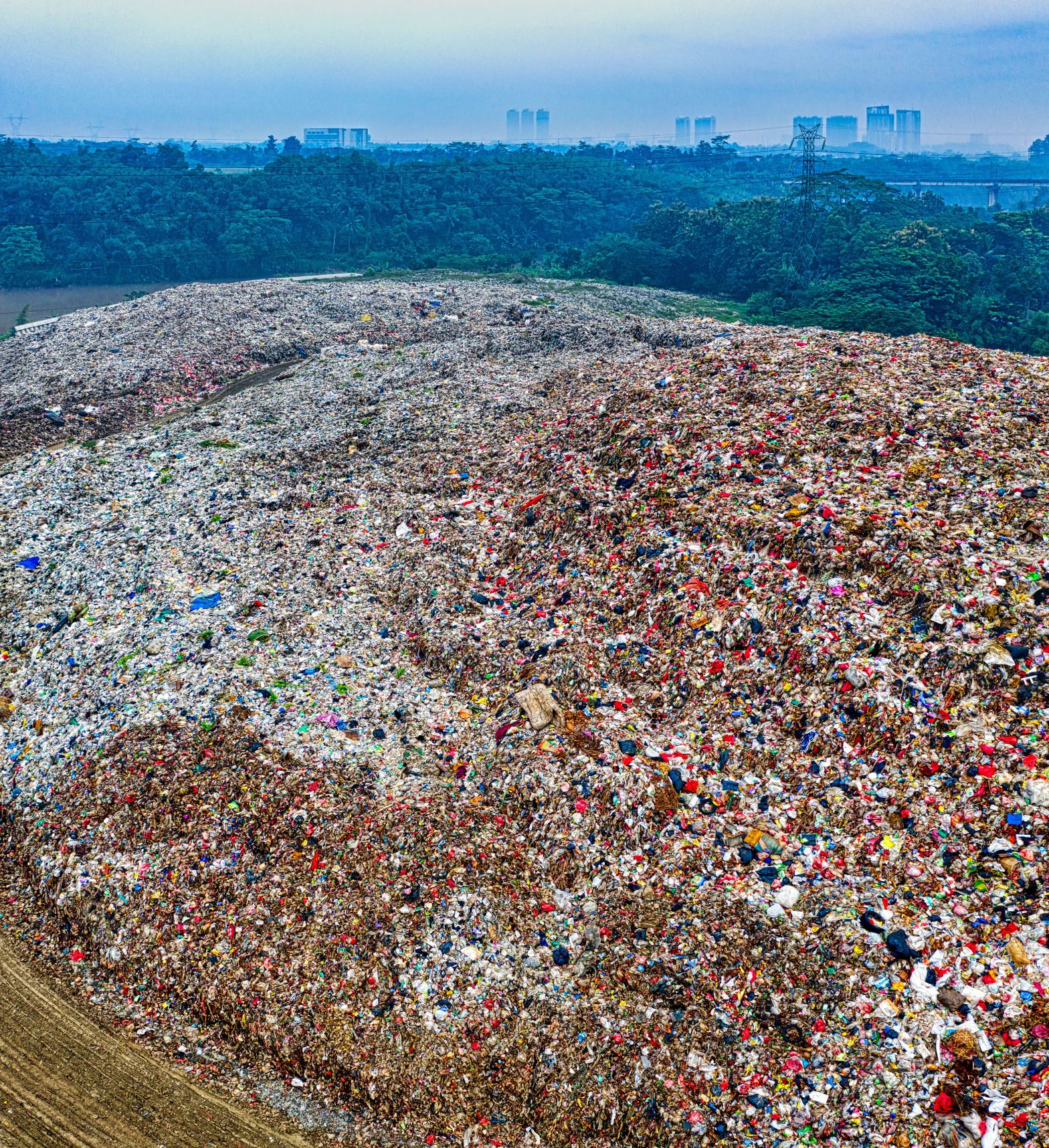

Every week, I put a wheelie bin containing the household rubbish out in front of the house. Some weeks it is full. I imagine where the rubbish will go. I see rubbish piles the size of houses, for every household, grow over the years. The word ‘landfill’ keeps things nice and tidy, but in reality the sprawling mass of discarded waste, with a stench to match, is beyond comprehension.
By contrast, I once stayed in a spiritual community in India. There were no rubbish bins there. Every littlepiece of rubbish was reused or recycled. The sheer challenge of discarding anything meant that you were much more careful about what you consumed. Nobody used plastic carrier bags. Kitchen waste was composted. Recyclables were separated. There was a culture of preserving the land, and protecting it from human destruction.
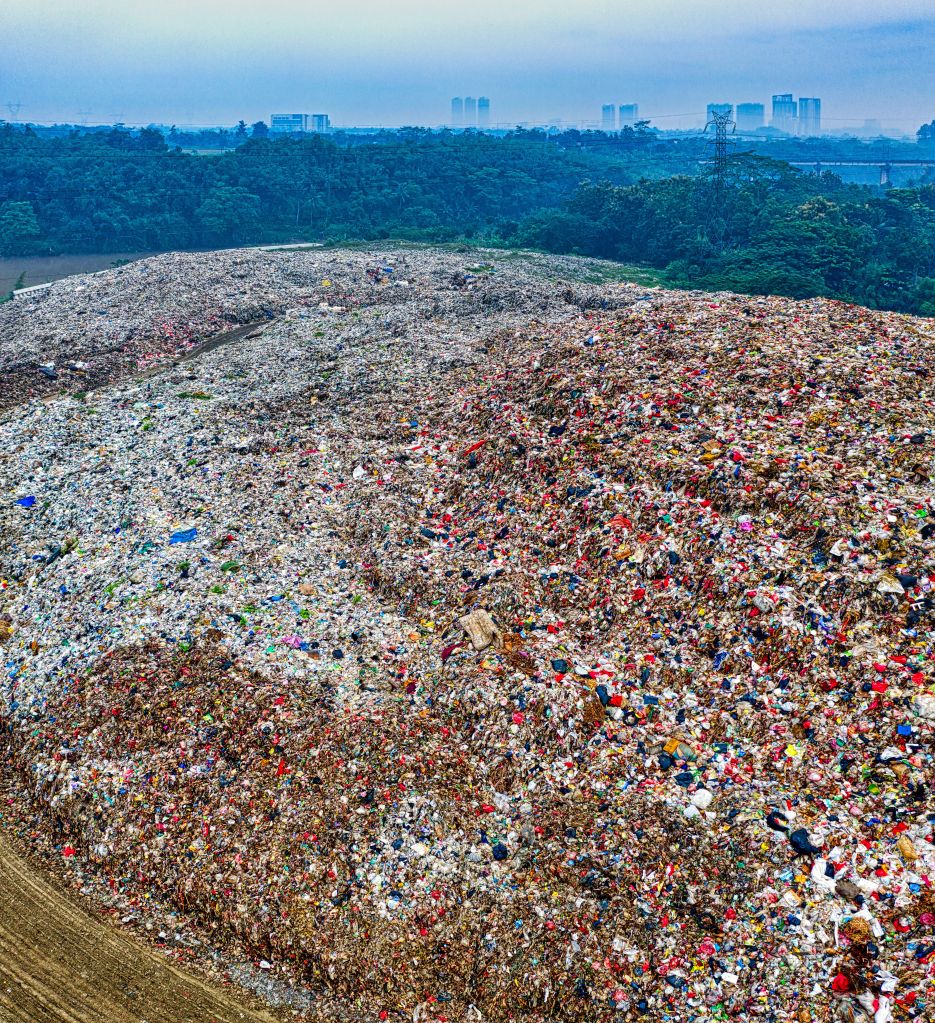
The garbage culture here in the UK is one that has forgotten nature. In the process of developing, over the past five millennia, since urbanisation, we have become habitualised to throwing our rubbish away. ‘Away from here’, ‘out of sight, out of mind’, ‘far, far away’. In reality, away does not exist. There is no away. On landfill sites, nature has gone, waterways are poisoned, the air is polluted. And these sites are only getting bigger.
We have slowed down our rubbish disposal with recycling. The good news is that more waste is being recycled than ever before. But we need to do more. Just a few minutes more each day separating waste could result in more waste being recycled.
The mantra reduce-reuse-recycle is handy in remembering the order of waste reduction. Foremost, we need to reduce what we cosume, secondly, we reuse what we have aready consumed, and thirdly, we recycle what we have consumed, rather than throw it away. Having somewhere to store bags, scrap paper, elastic bands etc can be useful, as well as reducing your consumption. Used envelopes can be cut into notepaper for shopping lists and the windows that you get in envelopes can be recycled at the supermarket thin plastics recycling bins. Food containers may need a wash before they can be recycled, just put them through at the end of the washing up. When you leave the house, take a canvas bag to avoid using any plastic bags (reduce). Or, secondly, reuse old plastic bags. Take old shoes and clothes to charity shops. Do your clothes shopping at preloved shops like Vinted or Depop (reuse). Or ask yourself, do I really need to buy something new (reduce)? The number of measures that we can take to reduce our rubbish are endless.
Plastics
The waste that we produce is not limited to what we put in black sacks. Every time we wash something plastic, we release microplastics into the water supply. Thousands of plastics shreds litter our water supplies. Personally, I worry that my biggest contributor to plastic waste is plastic tupperware. I always batch cook, so tupperware is an important part of my routine. I wash them every few days. Ideally they would be made from plant based plastics. Many plant based plastics biodegrade. Once they are released into the waterways they dissolve into sediment, and provide organic matter for the river bed. But these products are still not on the market. I have replaced my green sponge scourer with a coir sponge, a form of plant based produce, so I can rest easy about that, but my washing up bowl is still conventional plastic.
Choosing non plastic solutions, or when to use recycled plastic and when to use plant based plastic also takes a little thinking. Things that get washed regularly, or come into contact with liquid, like shampoo bottles and clothes, should be made with plant based plastic, unless they can be made with other types of plant based fibres. Things that we do not wash often, like drawers, trays, stationery, bins can be made with recycled plastics. There is a lot of recycled plastic, which is fantastic, but it needs to be directed towards products that do not have much contact with the water supply i.e. that is not washed very often.
Compost
The amount you can compost, and return to the earth in the form of soil, is surprising. Gardeners are probably already familiar with what you can and cannot compost. The biggest item of waste that is compostable is humanure, but, sadly, few people are in a position to recycle their toilet waste. Kitchen waste can be composted and applied to condition the soil in the garden. Food waste can also be turned into biogas. There is a debate about which is more ecological, but both are better than landfill. If you have your own compost heap you can include more things than the municipal collection food waste. Things like old cotton socks, paper tissues, hairbrush hair and nail clippings, floor sweepings, dust, full vacum cleaner bags, shredded bank statements, anything that is made of organic matter and biodegrades in the space of a few months.
One thing to consider when making decisions about what to consume is the conflict of interest between carbon counting, and averting biodiversity loss. Plastic bags have a surprisingly low carbon cost compared to paper carrier bags. But when it comes to biodiversity, the plastic bags are seriously damaging to the environment, compared to the paper bags, which come from trees and decompose quickly. The result is that an organic cotton canvas bag that lasts for years is the superior option, and they can look cool too. When it is worn out, after hundreds of uses, add it to the compost bin. It is important to consider both carbon emissions and the impact on biodiversity. There’s no point averting climate change if there’s no natural world left. Nature feeds us by pollinating our plants, providing clean water and air to breathe, and replenishing our soils through decaying animals. When our biodoversity breaks down, we lose all those things.
Lessons in the shower
I was having a shower yesterday, and as usual, at the end I wash my hair. There are lots of bubbles on my head and I decide that I also need to shave my legs. So I take some bubbles from my hair and put them on my legs. I am probably saving half a day’s worth of soap. It does not seem like very much in the grand scheme of things, but crunching the numbers gives a figure of 15% less soap. But is it really worth it? I do it because I hate wasting soap. I am pisces, so I think I may have an affinity for the fish in the rivers and oceans. I don’t want to poison their home more than I have to.
Reducing consumption by fractions here and there is difficult to appreciate. It can turn reduce-reuse-recycle into a real chore. No Light Ecology recognises that when we take the three Rs to their furthest point we stop feeling light filled and become slightly tired. We need to spot savings in our daily routine as much as possible, but it becomes an effort, the more we do it. Attending to the minutiae in our daily routines goes against the grain of modern progress. Modernity believes we should be free to waste; it is the price of convenience. With mainstream culture engrained with this kind of laziness, will we be able to tackle the minutiae en masse? Will most people think I’m crazy to reuse my shampoo foam?
I have experienced a few like minded people in my life. The spiritual communty in India, where I lived in a tree house was one of them. I didn’t wear shoes and I showered out amongst the trees. I was physically and mentally connected with the earth. There was no room for rubbish, or waste of any kind. There are no dustbins in the jungle. Out in the forest there was a culture of sorting every last piece of rubbish, however small. It took some getting used to as it used a new part of my brain, but after a while it became habitual, I knew where most things went and I had cut out things I could not recycle.
The second place I learned that it was ok to think about the minutiae was from my grandmother. She lived ‘up north’ so I didn’t get to see her very often but when I visited her house as a child I noticed that she had a set of tiered boxes by the back door. In each box was a different item to be recycled. This was in the 1990s, so we had only just started taking our glass bottles to the bottle bank down south. But here was my grandma separating tea bags, from plastic, from paper. Each and every tea bag that she used was saved from landfill, presumably composted.
To many people, this process of sorting rubbish is too much to ask, to them it is literally a load of rubbish. Even broadly sorting rubbish into recycling and waste is too much for many people. I guess it is because they cannot process the damage that every little bit of waste does, how bigger land fill sites means less land for wildlife, and how relatively easy recycling is in preventing land fill. Plastic trays, cardboard wrappers, however big or small they are, it helps if they make it into the recycling bin rather than going to landfill. If you can find someone with a compost heap, you can even save your food waste, that’s if your council does not already collect it. Use the thin plastics hubs at the supermarkets, put everything you can into recycling. Set yourself the challenge of throwing nothing away. Keep your eye on the waste bin and see how long you can make a rubbish bag last.
The more you do it, the more it becomes habit. Even though it is not always easy to process, ‘can this be reused or recycled?’ it is an effort that aims to reintegrate the dark energy of consumption with the consumer. Protecting ecology from suffering due to industrialisation (see previous posts) can only be achieved by some level of caretaking, and effort, on the consumer side. By sacrificing some of our modern freedoms, can we shift the balance and help protect nature in the face of industrialisation?
 Sarasvati Flow